Ballerina Nails: 25 Designs for the Tapered Square
The global artificial nails market is projected to reach $1.7 billion in 2026 (Persistence Market Research), and ballerina nails sit right at the center of that growth — named for the tapered silhouette of a pointe shoe, and consistently one of the most-requested shapes at salons on both sides of the Atlantic. Yet most people still confuse it with coffin, its sharper-edged cousin.
This guide clears that up. You’ll get 25 wearable ballerina nail ideas, an honest comparison against coffin nails, real 2026 salon prices, a skin-tone color guide, and the five mistakes that undercut the shape’s elegance. At NailBold, we think of ballerina as the shape that rewards a soft hand — gentle tapers, not sharp angles. Ready to see if it fits your style?
Key Takeaways
• Ballerina nails have gently tapered sides and a flat, squared tip — softer than coffin, more structured than almond.
• The global artificial nails market is projected to reach $1.7 billion in 2026, growing to $2.6 billion by 2033 (Persistence Market Research, 2026).
• Expect $45–$75 for a full acrylic ballerina set; fills run $30–$50.
• The flat tip makes ballerina nails the best canvas for chrome powder — it catches light in one clean, uniform band.
• NailBold’s pick: a milky jelly ballerina set with a micro-French tip. Elegant, wearable, low-maintenance for the shape.
Table of Contents
What Are Ballerina Nails?
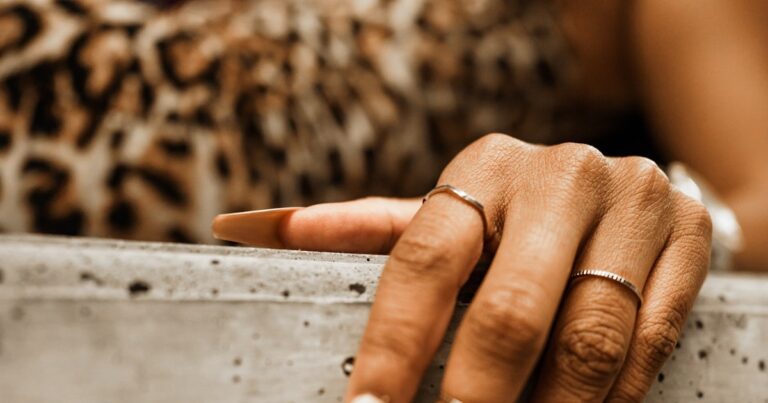
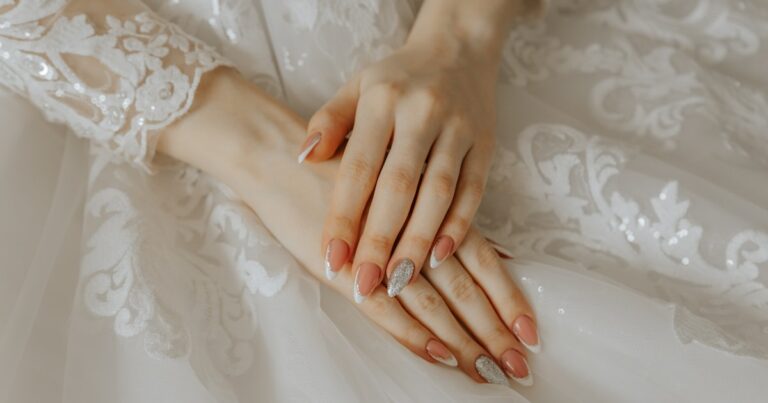
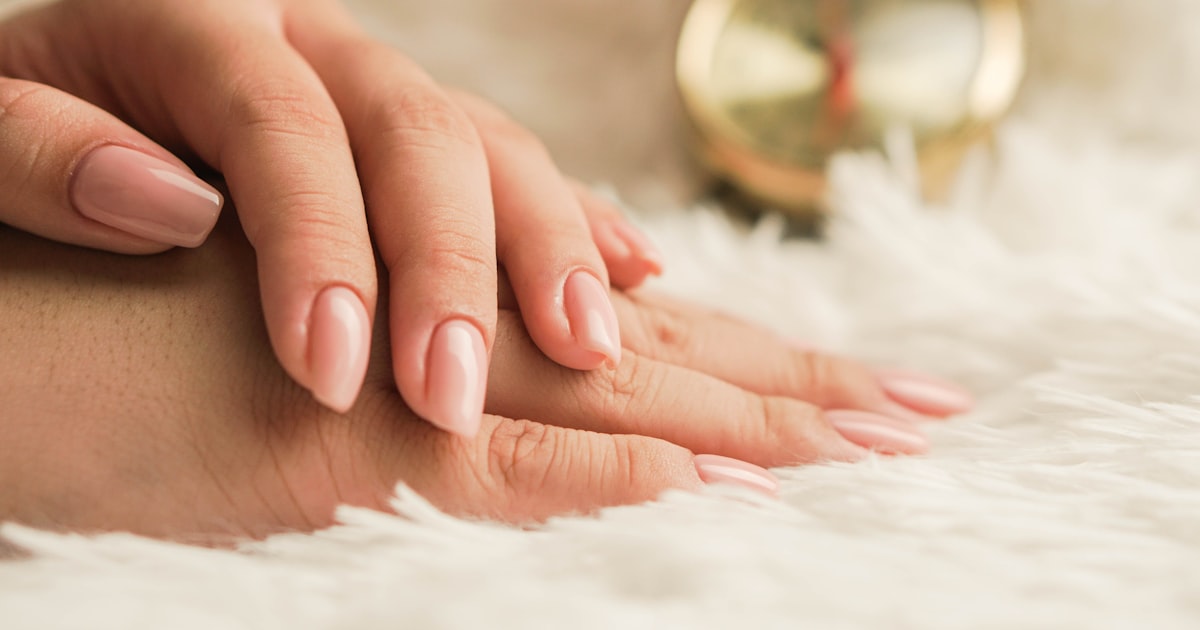
Ballerina nails are a tapered nail shape with gently narrowing sides that end in a straight, flat free edge — named for their resemblance to a ballet pointe shoe. As of 2026, the shape has moved past being a structural choice; it’s become a design statement in its own right, with chrome, jelly, and fine-line art all built specifically around that flat tip.
The taper is softer than it looks. Side walls narrow gradually rather than sharply, corners stay rounded rather than pointed, and the tip stays wide enough to feel stable — nothing like the fine point of a stiletto. That combination is why ballerina nails read as elegant rather than aggressive, even at a similar length to bolder shapes.
Here’s the trade-off, and it’s a fair one. Ballerina nails elongate the fingers nearly as much as stiletto without the fragility, and the flat tip gives nail artists a genuinely wider surface to work with than almond or oval. The cost is structural: the tapered sidewalls carry more stress than a straight square shape, so natural nails need real strength (or reinforcement) to hold it long-term.
New to comparing shapes? Our nail shapes chart maps every major option side by side, and our types of nail shapes guide covers the classics in more depth.
How Do Ballerina Nails Differ From Coffin Nails?
In 2026, the ballerina-versus-coffin question comes up constantly, because the two shapes genuinely overlap — both taper to a flat tip, and many salons use the names interchangeably. The real difference is in the angles: ballerina keeps a gentler, more gradual taper with softer corners, while coffin commits to a sharper, more dramatic angle with wider corners.
Think of it this way: if coffin nails are a bold architectural statement, ballerina nails are the same silhouette softened for daily wear. Neither is objectively better — the choice comes down to how sharp you want the taper to read.
| Feature | Ballerina | Coffin | Almond | Stiletto |
|---|---|---|---|---|
| Taper angle | Gentle, gradual | Sharp, dramatic | Rounded point | Single sharp point |
| Tip shape | Flat, softened corners | Flat, angular corners | Rounded | Pointed |
| Min. length needed | Medium | Medium | Short–medium | Medium–long |
| Best for | Elegant everyday drama | Bold nail art canvas | Low-risk daily wear | Statement events |
| Chrome/art surface | Excellent — wide flat tip | Excellent — widest flat tip | Limited by curve | Narrow at the point |
| Structural risk | Moderate | Moderate | Low | High |
Notice how ballerina and coffin trade almost identical practical stats — length, structural risk, art surface — and differ mainly in how the corners and angle feel? That’s the whole decision in one sentence: pick coffin for drama, pick ballerina for polish. If coffin’s sharper edges appeal to you more, our coffin nail ideas guide has 40+ designs built around that angle.
What Are the Best Ballerina Nail Designs for 2026?
In 2026, ballerina nails are less about the structure and more about what’s painted on top of it. Here are 25 ideas we’d actually book, grouped by mood. Which group matches your everyday look?
Milky and Nude (Ideas 1–6)
- Milky jelly ballerina: Sheer, luminous, almost skin-like — our top pick for the shape.
- Quiet luxury nude matte: Zero shine, maximum polish — the shape’s most understated look.
- Caramel cream: Warm nude that photographs beautifully against tanned skin.
- Glass milk white: Translucent white with a glossy top coat.
- Blush pink ballerina: Soft, quiet, easy to wear to any office.
- Cafe au lait: A warm greige that flatters nearly every undertone.
French Tip Evolution (Ideas 7–11)
- Micro-French ballerina (see our french tip nails guide): A thin, crisp line across the flat edge — the shape’s signature French look.
- Black French tip: Swap white for black on the flat edge — sharp and modern.
- Gold-lined French: A fine metallic line separating tip from base.
- Chrome French tip: Mirror-finish tip over a sheer nude base.
- Reverse French: Color at the cuticle instead of the tip — an unexpected flip on the classic.
Chrome and Metallic (Ideas 12–17)
- Silver chrome ballerina: The flat tip gives chrome powder its cleanest, most uniform reflection.
- Rose gold chrome: Softer than silver, equally reflective.
- Holographic ballerina: Color-shifting finish that photographs differently every time.
- Glazed donut chrome: Pearlescent sheer chrome over a milky base.
- Metallic emerald: Jewel-tone with a metallic cast, made sharper by the flat tip.
- Deep burgundy chrome: Vampy color with a soft mirror finish.
Art and Texture (Ideas 18–25)
- Fine-line florals: Delicate hand-drawn botanicals across the flat canvas.
- Marble ballerina: Swirled veining across the widest part of the tip.
- Negative-space geometric: Bare nail plus one bold architectural line.
- Pearl cuticle accent: Tiny pearls along the base of one nail only.
- Ombre sunset: Warm gradient that draws the eye across the wide tip.
- Cat-eye ballerina: Magnetic polish creating a glowing line across the flat edge.
- Checkerboard accent: A graphic pattern on one or two nails, plain elsewhere.
- 3D bow accent: A small sculpted bow on the ring finger — a nod to the shape’s ballet roots.
Which Ballerina Nail Finishes Are Trending in 2026?
As of 2026, chrome and glazed finishes dominate ballerina nail requests, and the shape has a genuine technical advantage here: its flat tip gives chrome powder a clean, uniform band to reflect light from, something curved shapes like almond or oval simply can’t replicate. Milky jelly and quiet-luxury matte nudes come next, favored by anyone who wants the elegant taper without the shine.
Micro-French tips are the third major trend — a thin, crisp line across the flat edge that modernizes the classic French manicure. It works especially well on ballerina because the straight tip gives the line a cleaner edge than a rounded or pointed shape ever could.
Extensions are driving a lot of this. Fortune Business Insights (2026) values the acrylic artificial nails segment alone at $740 million, growing at a 5.81% CAGR through 2034 — and ballerina, alongside coffin, remains one of the most-requested full-set shapes precisely because it gives that segment’s chrome and art techniques the most surface to work with.
Which Skin Tones Suit Which Ballerina Colors?
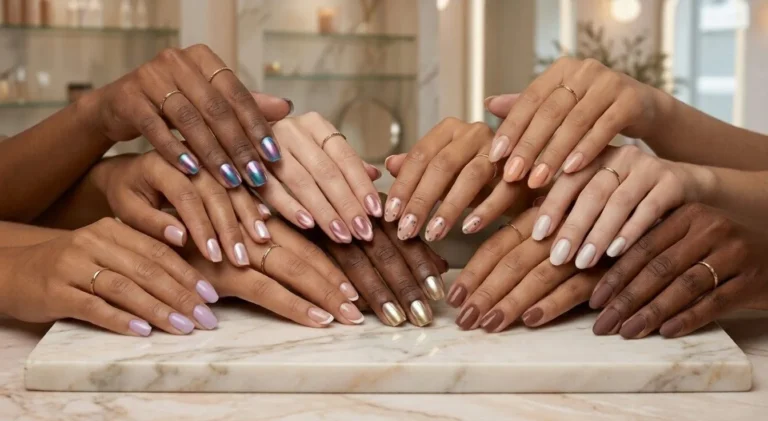
In 2026, undertone matching matters more on ballerina nails than on shorter shapes — the wide flat tip shows more surface color than a curved shape does. At NailBold, skin-tone tables are consistently our most-read content, so here’s the ballerina-specific version. Find your row, then borrow the whole column.
| Skin Tone | Undertone | Best Ballerina Shades | Skip This Combo |
|---|---|---|---|
| Fair | Cool | Milky white, blush pink, silver chrome | Orange-based nudes |
| Fair | Warm | Caramel cream, cafe au lait, gold chrome | Stark icy white |
| Light-medium | Neutral | Milky jelly, quiet-luxury nude, glass white | Neon brights |
| Medium | Warm | Terracotta nude, gold shimmer, warm beige | Cool icy pastels |
| Medium | Cool | Rose gold chrome, mauve, cool nude | Mustard-toned nudes |
| Olive | Warm-neutral | Caramel, bronze chrome, warm greige | Pale baby pink |
| Deep | Warm | Gold chrome, warm caramel, amber nude | Sheer nudes that vanish |
| Deep | Cool | Silver chrome, cool mauve, deep espresso | Washed-out greige |
Quick test: check the veins on your wrist in daylight. Green reads warm, blue reads cool — and if you can’t tell, you’re neutral, which means milky jelly and quiet-luxury nude will both work beautifully.
How Much Do Ballerina Nails Cost? Salon vs DIY
In 2026, expect $45–$75 for a full acrylic ballerina set at most salons, with fills running $30–$50 depending on regrowth. High-end salons in major metros can push past $100 for elaborate chrome or hand-painted art on top of the base set. Press-on ballerina sets are the budget entry point at $10–$30.
The U.S. Bureau of Labor Statistics projects manicurist and pedicurist employment will grow 7% from 2024 to 2034, well above the average occupation, with about 24,800 openings projected each year. More techs generally means more specialization in extension shapes like ballerina — worth checking a salon’s portfolio specifically for flat-tip work before booking.
Here’s the honest progression path, whatever your budget:
- Beginner ($10–$30): A press-on ballerina set. Size the tabs first, apply with adhesive tabs or glue, and you’ll know within a day whether the length suits your routine.
- Intermediate ($40–$80 startup): At-home acrylic or hard gel extensions. File the taper gradually — rushing the sidewalls is the fastest way to end up with an uneven set.
- Professional ($45–$75+ per visit): Salon acrylic or hard gel with chrome, micro-French, or fine-line art. Bring a reference photo — “ballerina” and “coffin” get used interchangeably enough that a photo avoids confusion.
What Are the Most Common Ballerina Nail Mistakes?
Most ballerina disappointments come down to five fixable habits. Here they are, each with a one-line fix.
- Filing the taper too sharply: This drifts the shape toward coffin instead of ballerina; keep the angle gradual and the corners softened.
- Forcing the shape onto short nails: Without enough length, the flat tip looks stubby instead of elegant; add extensions or choose almond instead.
- Uneven sidewall tapers: Hold both hands together, nail to nail, to catch mismatched angles before they’re set permanently.
- Skipping structural reinforcement: The tapered sidewalls carry more stress than a square shape; proper apex placement in the acrylic or gel prevents cracking at the corners.
- Choosing a finish that fights the flat tip: Heavily textured finishes can look choppy across a wide, flat surface; chrome, glazed, and matte all read cleaner on this shape.
FAQ: Your Ballerina Nail Questions, Answered
What is the difference between ballerina and coffin nails?
Ballerina nails have a gentler, more gradual taper with softened corners, while coffin nails commit to a sharper angle with more dramatic, angular corners. Both end in a flat tip and need similar medium length. The choice comes down to how sharp you want the taper to read — ballerina for elegance, coffin for drama.
How long do ballerina nails need to be?
Ballerina nails need at least medium length to show the taper properly. Shorter nails forced into the shape look stubby rather than elegant. Acrylic, hard gel, or polygel extensions build the length needed if your natural nails are short.
Are ballerina nails hard to maintain?
They require more care than square or round shapes, since the tapered sidewalls carry more stress. Expect fills every 2 to 3 weeks at $30 to $50 each. Proper apex placement during application significantly reduces the risk of cracking at the corners.
How much does a ballerina nail set cost in 2026?
A full acrylic ballerina set runs $45 to $75 at most salons in 2026, with elaborate chrome or hand-painted art pushing the price past $100 at high-end salons. Fills cost $30 to $50. Press-on ballerina sets are the budget option at $10 to $30.
What nail finish works best on ballerina nails?
Chrome and glazed finishes work best because the flat tip reflects light in one clean, uniform band that curved shapes cannot replicate. Milky jelly and matte nudes are the next most popular choices for a softer, quieter look.
Is the Ballerina Shape Right for You?
Ballerina nails split the difference between drama and daily wear — tapered enough to elongate, soft enough to feel elegant rather than sharp. The short version: keep the taper gradual, expect $45–$75 for a full salon set, and lead with chrome or milky jelly if you want 2026’s most-requested finishes. Which of the 25 ideas above matches your next appointment? For the sharper-angled version of this shape, our coffin nail ideas guide is the natural next stop.
NailBold covers everything you need to know about nail art, nail shapes, nail polish colors, and nail trends. Explore our full library at nailbold.com.
Sources: Persistence Market Research, “Artificial Nails Market Size and Share, 2026–2033,” retrieved 2026-07-13 — https://www.persistencemarketresearch.com/market-research/artificial-nails-market.asp · Fortune Business Insights, “Acrylic Artificial Nails Market, 2026–2034,” retrieved 2026-07-13 — https://www.fortunebusinessinsights.com/acrylic-artificial-nails-market-113408 · U.S. Bureau of Labor Statistics, “Occupational Outlook Handbook: Manicurists and Pedicurists,” retrieved 2026-07-13 — https://www.bls.gov/ooh/personal-care-and-service/manicurists-and-pedicurists.htm
Share this article