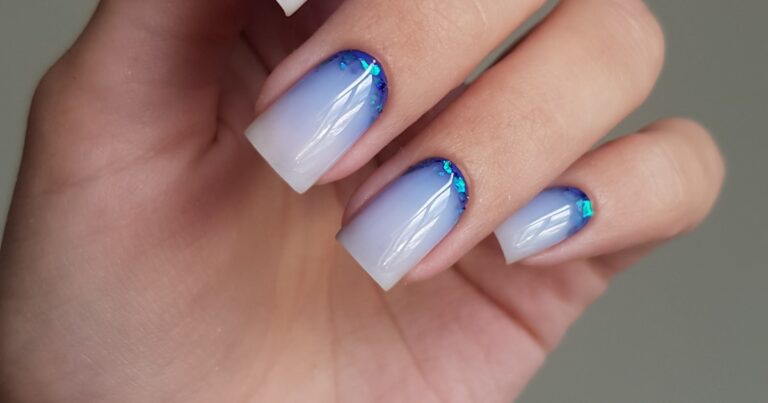
Diamond Nails: 20 Stunning Ideas You’ll Love in 2026
Celebrity nail artist Ramon “Prince” Duran called it months ago: 2026 would bring a wave of understated sparkle — sheer bases, minimal designs, and a hint of dimension from tiny rhinestones. He was right. Diamond nails are everywhere this year, from Kylie Jenner’s rhinestone florals to Khloe Kardashian’s gemstone stars and moons (Marie Claire, 2026).
The problem? Most home attempts lose their first stone within 48 hours — and a manicure missing one gem looks worse than a manicure that never had any.
This guide covers 20 diamond nail ideas from single-stone minimal to fully jeweled, a stone-type comparison table, the placement rules that keep gems on for weeks, and the five mistakes behind every lost crystal. At NailBold, we’ve tested every adhesive method on this list. Ready to add the sparkle that stays?
Key Takeaways
• Diamond nails are 2026’s jewelry-inspired trend — French, chrome, and rhinestones form the season’s trifecta (Marie Claire, 2026).
• Flatback stones set over gel last 2-3 weeks; over polish, 5-7 days.
• The 2026 version is minimal: one crystal on sheer, not full pave.
• NailBold’s starter pick: a single stone at the cuticle of one accent nail.
Table of Contents
What Are Diamond Nails?
Diamond nails are manicures decorated with flatback crystals, rhinestones, or gems — anything from one stone floating on a glossy nude to a fully paved statement set. With women driving $15.6 billion in polish spending — 88.1% of the market (Global Market Insights, 2026) — gems are the fastest way to make that spending look like fine jewelry.
The name is generous, of course. Real diamonds appear only in rare luxury salon services; what the trend actually uses are glass or resin flatback stones — crystals cut flat on one side so they sit flush against the nail and catch light from the domed top. The best glass versions sparkle convincingly enough that nobody checks.
What changed in 2026 is the volume knob. Gem nails used to mean maximalist pave sets built for photos; this year’s version is one tiny crystal on a sheer base, or a row of micro-stones tracing a French smile line. The gem stopped being the outfit and became the earring.
That shift matters practically too. Minimal diamond nails survive real life in a way pave sets never did — fewer stones means fewer failure points, faster application, and a look that works at the office on Monday after sparkling at the wedding on Saturday. The restraint is the durability strategy.
Beyond stones, the kit is short: a dotting tool or wax picker to place them, adhesive (gel or nail glue), and a top coat to seal. Our nail art instruments guide covers those tools before you buy anything.
Why Are Diamond Nails Trending in 2026?
In 2026, gem manicures sit inside a bigger movement: the nail art tools market is growing 10.3% a year, from $299 million in 2024 toward $585 million by 2034 (Intel Market Research, 2026), and embellishments are one of its fastest shelves. The short answer for why: nostalgia, celebrities, and cameras.
The nostalgia part is real — beauty press keeps calling gem nails the most nostalgic nail art trend of 2026, a callback to Y2K sticker-and-stone manicures worn by people who now have salon budgets. Celebrities supplied the reference images: Kylie Jenner’s rhinestone florals and Khloe Kardashian’s celestial gemstone set both traveled far beyond their original posts.
And like chrome before it, the trend is camera-fed. A faceted stone throws light with every hand movement in a way no flat polish can, which makes gem manicures disproportionately shareable in short-form video — 3D nail art tutorials routinely pull millions of plays. Depth wins feeds.
Gems also stack beautifully on the year’s other trends — a crystal at the base of a chrome nail, or micro-stones dotting a milky French tip. Our chrome nails guide covers the finish half of that pairing.
According to Marie Claire (2026), French tips, chrome, and rhinestones form the defining nail trifecta of 2026, with the gem trend built on sheer bases and minimal stone placement rather than full coverage. At NailBold, we recommend starting with one crystal at the cuticle of a single accent nail, because it delivers the entire trend for about fifty cents of materials.
Which Stones Should You Use for Diamond Nails?
The nail polish market will hit $19.7 billion in 2026 on its way to $31.0 billion by 2033 (Grand View Research, 2026), and stone quality is where gem manicures quietly split into tiers. The quick answer: glass flatbacks for sparkle, resin for budget sets, and always flat-backed — never pointed-back stones meant for fabric.
| Stone type | Sparkle | Weight | Price (2026, approx.) | Best for |
|---|---|---|---|---|
| Glass flatback crystals | Excellent | Light | $8-$15 per wheel | Everything — the default |
| Resin rhinestones | Good | Very light | $4-$8 per wheel | Budget and practice sets |
| Micro pixie crystals | Shimmer wash | Featherweight | $6-$12 per pot | Crushed-diamond gradient looks |
| Pearls (half-round) | Soft luster | Light | $5-$10 per wheel | Bridal, quiet luxury |
| 3D charms and shapes | Varies | Heavy | $6-$15 per pack | Statement accent nails |
| Chrome-backed gems | Mirror + facet | Light | $10-$18 per wheel | Pairing with chrome sets |
Size matters more than count. Stones between 2-4 mm read as jewelry; anything past 6 mm starts reading as costume unless the whole set commits to drama. And weight is the hidden variable — heavy 3D charms need gel-level adhesive and shorter wear expectations, no matter what the pack promises.
Honestly? Buy one mixed-size wheel of glass flatbacks and skip everything else for your first month. Variety teaches placement faster than quantity ever will.
Color-matching the stones is the other quiet skill. Clear crystals go with everything, but champagne-toned stones flatter warm skin and gold-set looks, while icy AB-coated crystals — the ones with a rainbow sheen — belong on cool-toned and chrome bases. Match the stone’s undertone to the base color’s, and the whole manicure reads as one designed piece.
20 Diamond Nail Ideas to Try in 2026
Gel’s $4.33 billion in annual sales against liquid lacquer’s $5.99 billion (Market.us, 2026) matters here because gems hold dramatically better over gel. The ideas below run minimal to maximal — 2026 taste says start low.
Minimal and everyday
- Single floating crystal: one 3 mm stone centered on a glossy nude — the trend’s purest form.
- Cuticle gem: one stone nestled at the base, like a ring setting.
- Micro-gem French: tiny crystals tracing the smile line of a classic French tip.
- Pearl accent nail: three half-pearls on one nail, bare gloss on the rest.
- Sheer base, scattered dots: a loose polka-dot cluster of 2 mm stones.
Statement and event
- Rhinestone florals: petals built from stones on a milky base — the Kylie Jenner reference.
- Celestial set: gem stars and moons scattered across sheer nails.
- Crushed-diamond gradient: pixie crystals fading from the cuticle outward.
- Full pave accent: one nail completely covered in micro-stones, nine kept simple.
- Chrome-and-gem stack: a crystal set on a mirror chrome base — maximum light per square millimeter.
The remaining ten live between those poles: gem-dotted swirled French, stones tracing a negative-space line, crystals on velvet cat-eye, black base with a single diamond (our black nail designs guide pairs that one), bridal pearl-and-crystal mixes, gem-tipped almond sets, birthstone-colored accents, star-set square nails, floating hearts, and the barely-there “diamond dust” wash of micro pixies over nude.
How Do You Apply Diamond Nails at Home?
At-home gel keeps compounding — the UV gel segment grows 7.8% annually through 2033 (Grand View Research, 2026) — and gem work is one of its most satisfying upgrades, because placement is a five-minute skill with a three-week payoff. Which level fits your kit?
Beginner — glue and stones, $10-$25
Paint and fully dry your manicure first. Then place a pinhead dot of nail glue where the stone goes, lift the stone with a wax picker or a barely-damp toothpick, set it, and press for ten seconds with the pad of your finger. Seal around — not over — the stone with clear top coat. Pre-jeweled press-ons are the zero-skill alternative, and the market behind them is heading from $738 million toward $1.075 billion by 2030 (Grand View Research data via Glamnetic, 2026).
Intermediate — gel-set stones, $40-$80
Gel changes the game: place each stone into a small bead of thick builder or gem gel, adjust while it’s still workable, then cure — the stone is now locked inside the layer rather than sitting on top of it. The gel bead should grip about a quarter of the stone’s height; it should feel anchored when you nudge it, never wobbly, before the lamp goes on.
Advanced — pave and 3D work, $90+
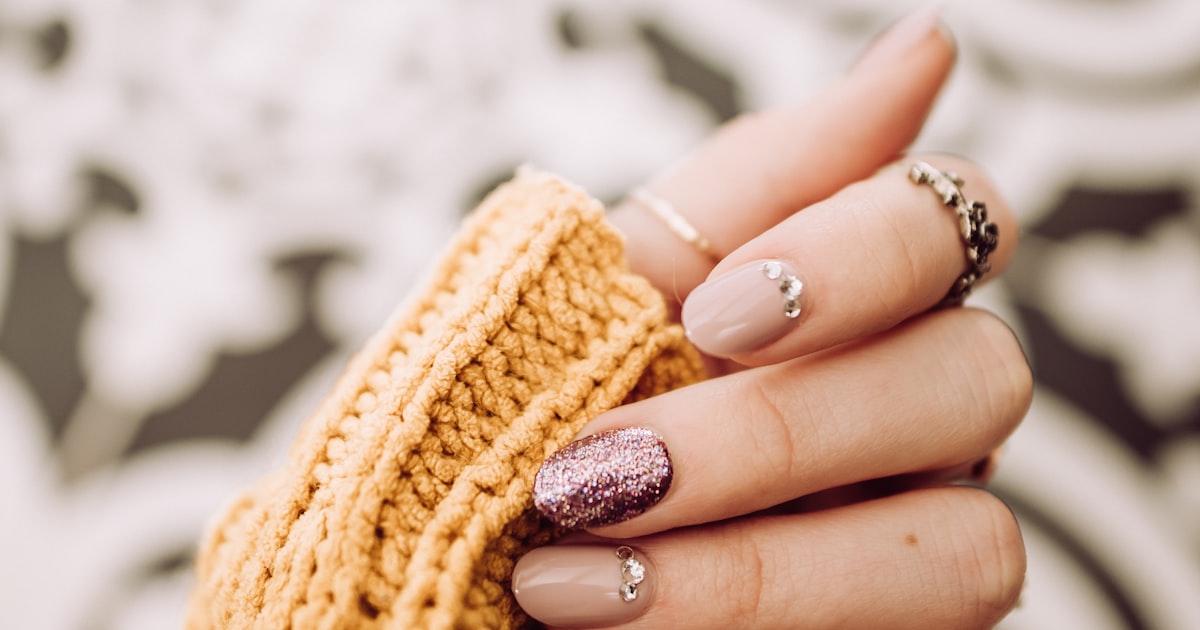
Full pave demands patience more than talent — stones set edge to edge, worked in small sections so the gel never cures before placement finishes. Heavy 3D charms need a flat gel platform built first, or they lever themselves off within days. At this level, book more time than feels reasonable: a full jeweled set runs 90 minutes minimum, even for techs. Our short gel nail designs guide has 22 gel bases that all take stones cleanly.
Common Diamond Nail Mistakes (and How to Fix Them)
Nail art tools — gem wheels included — are the industry’s fastest-growing shelf at 10.3% a year (Intel Market Research, 2026), and a lot of those stones end up in couch cushions by day two. Five mistakes cause nearly every lost gem.
- Placing stones at the free edge: Every doorknob and zipper hits the tip first. Fix: keep stones on the flattest center or base of the nail, away from edges.
- Setting stones on tacky polish instead of adhesive: Polish alone grips nothing past a day. Fix: a dedicated dot of nail glue or gel under every single stone.
- Flooding the stone with top coat: Sealing over the crystal’s face clouds the facets and kills the sparkle. Fix: seal around the base only, like grouting a tile.
- Using pointed-back stones: Craft-store stones meant for fabric rock on the nail’s curve and pop off. Fix: flatbacks only, always.
- Oversizing the statement: A 6 mm stone on a short nail overwhelms it and catches on everything. Fix: 2-4 mm stones sized to your nail bed, drama built from count rather than size.
I lost my first cuticle gem in a sweater sleeve within six hours — glue dot too small, stone too close to the edge. The second attempt lasted eighteen days. Every rule in the list above came from a stone I personally lost — consider them prepaid tuition, and skip the sweater-sleeve semester entirely.
Diamond Nails FAQ
What are diamond nails?
Diamond nails are manicures decorated with flatback crystals, rhinestones, or gems — from a single stone floating on a glossy nude base to fully jeweled statement sets. The name covers the whole gem-manicure family; actual diamonds appear only in rare luxury salon services.
How long do diamond nails last?
Stones applied over gel with proper adhesive last 2-3 weeks — the same as the gel beneath them. Over regular polish with nail glue, expect 5-7 days before the first stone lifts. Placement matters as much as glue: stones set on the flattest part of the nail, away from edges, survive longest.
How do you keep rhinestones from falling off nails?
Three rules cover it: set each stone into a dot of gel or nail glue rather than onto tacky polish, keep stones away from the free edge where impacts hit, and seal around each stone’s base with clear top coat or gel — without flooding the stone’s face, which kills the sparkle.
Are diamond nails too much for everyday wear?
Not in 2026 — the trend has flipped minimal. The season’s signature look is one tiny crystal on a sheer base or a row of micro-gems along a French smile line, which reads as jewelry rather than costume. Save the fully paved sets for events; a single stone works anywhere.
How much do diamond nails cost?
Salon gem work runs $5-$20 on top of a base manicure for accent stones, and $80-$150+ for fully jeweled statement sets. At home, a wheel of flatback crystals costs $6-$12 and covers dozens of manicures, making this one of the cheapest luxury effects to DIY.
One Stone or Twenty?
Diamond nails earned their 2026 comeback by learning restraint — the single crystal now outshines the full pave. Quick recap:
- Start with one stone on one nail — the whole trend for fifty cents.
- Glass flatbacks, 2-4 mm, center placement — the durability formula.
- Adhesive under, seal around, never over — sparkle stays, stone stays.
So — the quiet cuticle gem, or the full celestial set? Either sits best on a soft tapered canvas, and our oval nails guide covers 2026’s most forgiving shape for exactly this kind of work.
NailBold covers everything you need to know about nail art, nail shapes, nail polish colors, and nail trends. Explore our full library at nailbold.com.
Sources: Marie Claire, “The Nail Gem Manicure Trend Is Heating Up for Summer 2026,” 2026 — https://www.marieclaire.com/beauty/nails/nail-gem-trend/ · Global Market Insights, “Nail Polish Market Size and Share, Forecasts Report 2026-2035,” 2026 — https://www.gminsights.com/industry-analysis/nail-polish-market · Grand View Research, “Nail Polish Market Size And Share Report,” 2026 — https://www.grandviewresearch.com/industry-analysis/nail-polish-market · Intel Market Research, “Nail Art Tools Market Outlook 2026-2034,” 2026 — https://www.intelmarketresearch.com/nail-art-tools-market-31620 · Market.us, “Nail Polish Statistics,” 2026 — https://www.news.market.us/nail-polish-statistics/ · Glamnetic, “Best Nail Color Trends in 2026” (citing Grand View Research data), 2026 — https://www.glamnetic.com/blogs/news/best-nail-color-trends-in-2026 · All retrieved 2026-07-10.
Share this article