Builder Gel Nails: Stunning BIAB Guide You’ll Love in 2026
The fastest-growing corner of the entire nail industry is the one that looks the most natural. Builder gel nails — the strengthening overlay salons call BIAB or the structured manicure — ride the UV gel segment’s 7.8% annual growth (Grand View Research, 2026), and they have quietly become the most-requested service in a growing share of salons.
The confusing part? The names. Builder gel, BIAB, hard gel, structured manicure, overlay — half of them describe the same thing, and nobody at the salon counter explains which half.
This guide untangles every term, compares builder gel nails against gel polish, acrylic, and dip in one table, walks through the 8-step application, and covers the five mistakes that turn a strengthening treatment into a damaging one. At NailBold, we’ve worn BIAB through three full fill cycles to test every claim in it. Ready to understand what you’re actually booking?
Key Takeaways
• Builder gel nails strengthen natural nails with a structured overlay — riding the UV gel segment’s 7.8% annual growth (Grand View Research, 2026).
• BIAB = Builder In A Bottle, a GelBottle trademark now used generically.
• Wear time runs 2-4 weeks with a fill cycle, not a full redo.
• NailBold’s take: the best choice for growing short, breakage-prone nails.
Table of Contents
What Are Builder Gel Nails?
Builder gel nails are manicures built with a thick, structural gel that cures into a hard, glossy overlay — reinforcing the natural nail, adding an apex over its stress point, and reducing breakage for 2-4 weeks per application. Within gel’s $4.33 billion in annual sales (Market.us, 2026), builder formulas are the structural end of the shelf.
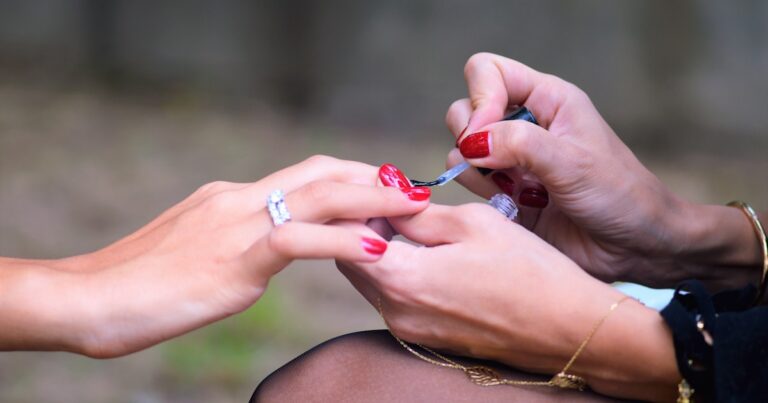
BIAB — Builder In A Bottle — is the name that made the category famous. It began as a trademark of The GelBottle Inc. for their bottled builder gel, and the industry adopted it generically the way tissues became Kleenex. Functionally, BIAB is builder gel with a convenience upgrade: polish-bottle packaging and a brush instead of a pot and spatula.
The word that actually matters is apex. A proper builder application leaves a subtle arch of product over the nail’s stress zone — the point near the smile line where natural nails flex and snap. That arch is the entire engineering of the manicure; the gloss is just the paint job. It’s also what separates a true structured manicure from a thick coat of ordinary gel.
Builder gel nails wear beautifully plain, but they also take color and art on top — our short gel nail designs guide has 22 looks that all sit happily over a BIAB base.
Why Is BIAB Everywhere in 2026?
In 2026, the UV gel segment is growing 7.8% a year through 2033 — ahead of the overall market’s 6.7% (Grand View Research, 2026) — and builder formulas are the segment’s engine. The short answer for why: BIAB is the manicure version of skincare, and 2026’s whole aesthetic is built around looking effortlessly healthy.
The clean-girl and “nonicure” movements did the cultural work. When the trending look is your own nails, only better, a treatment that strengthens the natural nail while staying nearly invisible wins by default. The micro French — this year’s other quiet giant — is most often painted over exactly this base, and our french tip nails guide covers that pairing.
There’s also a business reason salons love it, worth understanding as a client: BIAB books itself. Because the overlay needs a fill every 3-4 weeks to maintain the apex, it creates a recurring appointment cycle — clients treat their nails the way they treat their roots. You’re not buying a manicure; you’re subscribing to one.
The math still favors the client. A $55 BIAB appointment every four weeks costs less per day than a $40 gel manicure that chips in two — and because builder gel nails protect the natural nail between fills, you’re not paying a repair premium every few months when a break forces a full reset.
According to Grand View Research (2026), the UV gel segment is projected to grow 7.8% annually through 2033, faster than the overall nail polish market, with structural builder formulas among its key drivers. At NailBold, we recommend builder gel nails to anyone whose natural nails break before reaching the length they want — it’s the most effective fix we’ve tested for that exact problem.
Builder Gel vs Gel Polish vs Acrylic: What’s the Difference?
Women drive 88.1% of nail polish revenue — $15.6 billion in 2025, per Global Market Insights (2026) — and much of it gets spent on the wrong system for the wearer’s actual nails. Quick answer: builder gel for strength with a natural look, gel polish for color-only, acrylic for dramatic length, dip for durability without a lamp.
| System | Strength | Wear time | Removal | Salon price (2026, approx.) |
|---|---|---|---|---|
| Builder gel / BIAB | High | 2-4 weeks | Acetone soak-off | $45-$70 |
| Gel polish | Low (color only) | 2-3 weeks | Acetone soak-off | $35-$55 |
| Hard gel | Very high | 3-4 weeks | File-off only | $55-$85 |
| Acrylic | Very high | 3-4 weeks | Soak + file | $45-$75 |
| Dip powder | High | 3-4 weeks | Acetone soak-off | $40-$65 |
| Polygel | High | 3-4 weeks | File-off mostly | $55-$85 |
| Press-ons | Medium | 1-2 weeks | Peel or soak | $10-$30 (DIY) |
| Regular polish | None | 5-7 days | Remover wipe | $20-$35 |
The row that surprises people is hard gel: stronger than BIAB, but it only comes off by filing, which raises the removal-damage stakes considerably. Builder gel’s soak-off removal is its quiet superpower — strength you can undo without a drill. If you’re chasing length rather than strength, our nail length guide maps which system supports which length honestly.
Honestly? Most people booking acrylics for strength would be happier with BIAB. Acrylic earns its keep for dramatic extensions; for everyday resilience on your own nails, the overlay wins.
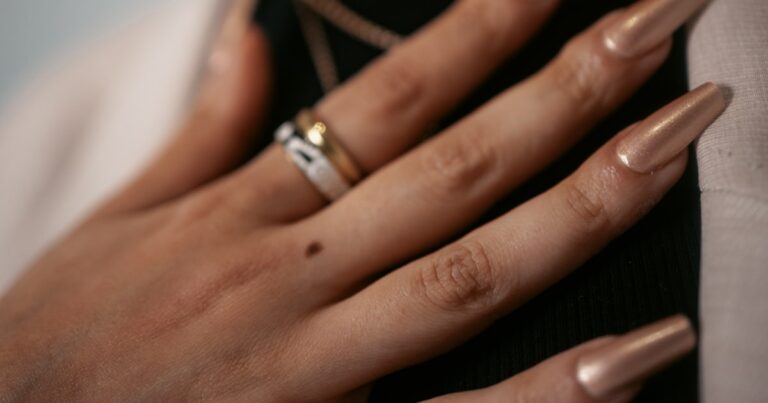
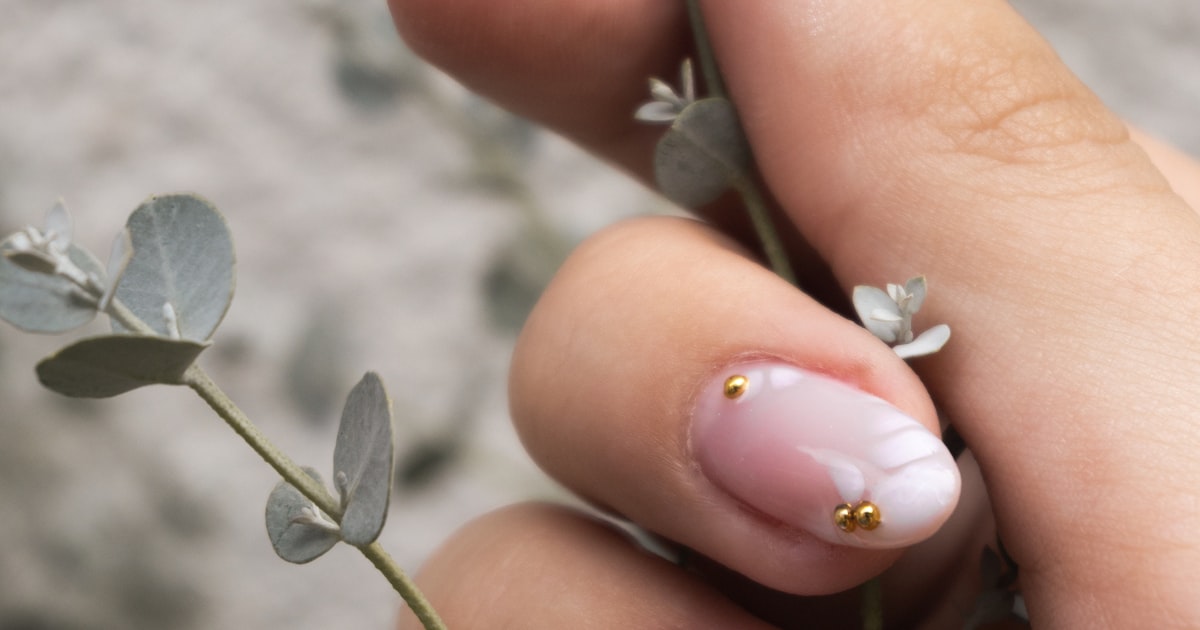
One more distinction worth knowing before you reach the salon counter: builder gel nails come in sheer pinks, milky whites, and nude tones as well as clear — which is why so many BIAB sets pass as bare, naturally perfect nails. The tint follows the same undertone logic as any nude polish: pink-based sheers flatter cool skin, peachy tones flatter warm.
Timing your first appointment matters less than timing your second. Book the fill for week three even if the set still looks flawless — by week four the grown-out gap shifts the apex forward of the stress zone, and that’s when breaks sneak back in. A standing appointment beats willpower here; the clients with the strongest natural nails are simply the ones who never stretch the cycle. That rhythm is what turns builder gel nails from a service into a system.
How Do You Apply Builder Gel Nails at Home?
The nail art tools market around gel systems is growing 10.3% a year (Intel Market Research, 2026), and home BIAB kits are a big reason. The full application is eight steps, and the middle two are where the structure happens.
- 1. Prep: push cuticles back, remove shine with a 180-grit buffer, dust off.
- 2. Cleanse: wipe every nail with alcohol — oil is the enemy of adhesion.
- 3. Base: a thin slip layer of the builder gel itself, cured.
- 4. Bead: place a bead of builder in the nail’s center, two-thirds toward the cuticle.
- 5. Float: guide — don’t drag — the gel toward the edges, then let it self-level for ten seconds with your fingertip pointed down.
- 6. Check the apex: look at the nail side-on; the highest point should sit over the stress zone, not at the cuticle.
- 7. Cure fully: 60-90 seconds LED depending on the formula — thick product needs every second.
- 8. Finish: refine the edges with a file, cleanse, and top-coat or keep the natural gloss.
The ten-second self-level in step five is the make-or-break moment — the gel should settle glassy-smooth on its own. If you’re brushing it flat like paint, you’re fighting the product instead of using it. A starter bottle plus lamp runs $35-$60, and one bottle covers months of fills. Our nail art instruments guide covers the supporting tools.
Give yourself three practice sessions before judging your results. The bead-and-float motion is a hand skill like whisking or pouring latte art — clumsy the first time, automatic by the third. Most home users find their builder gel nails start lasting the full three weeks once application slows down to about forty unhurried minutes per set.
Lamp quality is the hidden variable in home kits. A weak or aging LED lamp under-cures thick product even at full time, which shows up later as soft spots and mystery lifting. If your builder gel nails keep failing despite good prep, replace the lamp before blaming the bottle — it’s the cheapest fix that solves the most cases.
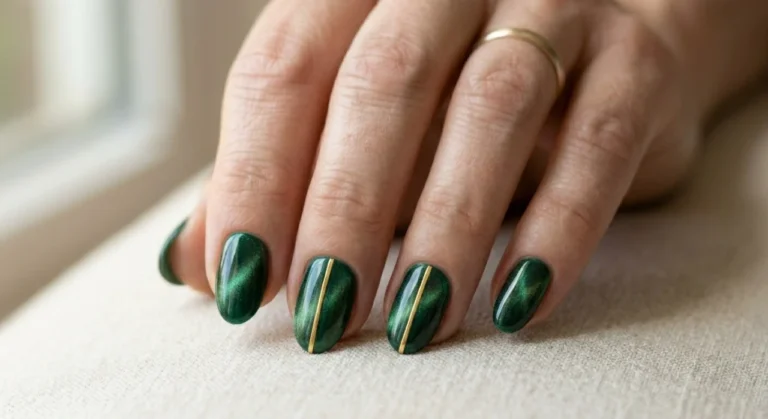
Once the overlay is on, it becomes the best canvas in nail care: magnetic cat-eye gels, chrome powders, and micro art all sit better over a structured base. Our cat eye nails guide is the natural next skill.
Common Builder Gel Mistakes (and How to Fix Them)
Press-ons are climbing from $738 million toward $1.075 billion by 2030 (Grand View Research data via Glamnetic, 2026) partly because DIY gel systems keep going wrong at the same five points. Every lifted, burning, or damaging BIAB set traces back to one of these.
- Skipping prep and cleanse: Builder gel lifts within days over oil or shine. Fix: buff, dust, and alcohol-wipe every nail — prep is half the wear time.
- Flooding the cuticle: Gel touching skin guarantees lifting from that edge. Fix: leave a hairline gap all the way around — growth hides it within days.
- Building flat with no apex: A level slab of gel snaps exactly like a natural nail. Fix: keep the bead’s height over the stress zone; check every nail side-on before curing.
- Curing one thick layer: Thick builder cures hot — the infamous heat spike — and may stay uncured underneath. Fix: two medium layers, fully cured each, beat one heavy one.
- Peeling it off: The overlay bonds hard; peeling takes nail plate with it. Fix: acetone soak-off, 10-15 minutes, every single time — this is where “gel ruined my nails” stories actually come from.
The heat spike deserves one extra line: if a nail suddenly burns under the lamp, pull it out for two seconds, then finish curing. That flash of heat is thick gel curing too fast — uncomfortable, avoidable, and completely normal to interrupt.
Removal deserves its own ritual too. File the glossy top layer first so acetone can penetrate, wrap each finger with a soaked pad and foil, and wait the full fifteen minutes — the softened gel then slides off under gentle pressure. If patches resist, rewrap for five more minutes rather than scraping. Builder gel nails removed this way leave the plate exactly as strong as before; scraped off, they leave it thinner every single time.
Builder Gel Nails FAQ
What is BIAB?
BIAB stands for Builder In A Bottle — a thick, self-leveling builder gel packaged in a polish-style bottle with a brush. The name was originally trademarked by The GelBottle Inc., but salons now use it generically for any bottled builder gel. It strengthens natural nails with a structured, glossy overlay.
What is the difference between builder gel and gel polish?
Thickness and structure. Gel polish is a thin color coating with no strengthening power; builder gel is several times more viscous and builds an apex — a subtle arch of product over the nail stress point — that absorbs impacts. Gel polish decorates the nail; builder gel reinforces it.
Does builder gel damage your nails?
Applied and removed correctly, no — it protects more than it costs. The damage risk lives entirely in removal: peeling or prying the overlay takes nail plate with it. Soak it off with acetone like gel polish, and many people find their natural nails grow longer under BIAB than ever before.
How long do builder gel nails last?
Two to four weeks per application, with three weeks the realistic average. Because the natural nail keeps growing underneath, salons book BIAB as a fill every 3-4 weeks rather than a full replacement — the tech refreshes the grown-out gap and rebuilds the apex without starting over.
Can you do builder gel on short nails?
Yes — short nails are the ideal starting point for BIAB. The overlay stops the constant micro-breaks that keep nails short in the first place, which is why so many people use builder gel specifically to grow their natural nails out past their usual breaking length for the first time.
Ready to Build?
Builder gel nails won 2026 by solving the oldest problem in manicures: nails that break before they get anywhere. Quick recap:
- BIAB = strength that looks like your own nails — and soaks off without a drill.
- The apex is the whole point — check every nail side-on before curing.
- Fill every 3-4 weeks, soak-off always — removal habits decide nail health.
So — plain glossy builder gel nails, or a chrome veil on top of them? The structured base makes every finish stronger, and our chrome nails guide covers the most requested one.
NailBold covers everything you need to know about nail art, nail shapes, nail polish colors, and nail trends. Explore our full library at nailbold.com.
Sources: Grand View Research, “Nail Polish Market Size And Share Report,” 2026 — https://www.grandviewresearch.com/industry-analysis/nail-polish-market · Market.us, “Nail Polish Statistics,” 2026 — https://www.news.market.us/nail-polish-statistics/ · Global Market Insights, “Nail Polish Market Size and Share, Forecasts Report 2026-2035,” 2026 — https://www.gminsights.com/industry-analysis/nail-polish-market · Intel Market Research, “Nail Art Tools Market Outlook 2026-2034,” 2026 — https://www.intelmarketresearch.com/nail-art-tools-market-31620 · Glamnetic, “Best Nail Color Trends in 2026” (citing Grand View Research data), 2026 — https://www.glamnetic.com/blogs/news/best-nail-color-trends-in-2026 · Refinery29, “All You Need To Know About BIAB,” 2026 — https://www.refinery29.com/en-us/biab-nails-builder-in-a-bottle · All retrieved 2026-07-10.
If you love this look, you’ll also enjoy Short Gel Nail Designs.
Share this article